Choosing a Power E Bike for international use requires more than comparing prices and advertised range. A suitable model must match your roads, climate, riding habits, and local regulations. A bike designed for flat city streets may struggle on steep hills or rough rural paths. Small details matter, too. Check the frame size, tire width, motor placement, battery capacity, charger plug, and total shipping weight.
This guide presents ten practical tips for global buyers. It focuses on verified specifications, battery safety, warranty terms, replacement parts, and dependable after-sales support. Buyers should confirm whether the motor rating, assisted speed, lighting system, and throttle functions comply with their destination’s rules. Requirements can differ between countries, provinces, and cities. Never rely only on a seller’s broad “international” claim.
Look closely at real-world evidence. A test ride, clear user manual, independent review, or dealer service record can reveal problems hidden by polished photographs. Ask how the bike performs after rain, repeated charging, and long climbs. An impressive range figure may assume a light rider, flat terrain, and low assistance. That is not your daily journey. One limitation of online buying is the missing physical inspection. I would rather accept a modest range with accessible parts than chase an inflated specification. Careful questions can prevent expensive returns, unsafe charging habits, and months without support. This article helps readers make a more informed, responsible, and practical decision.
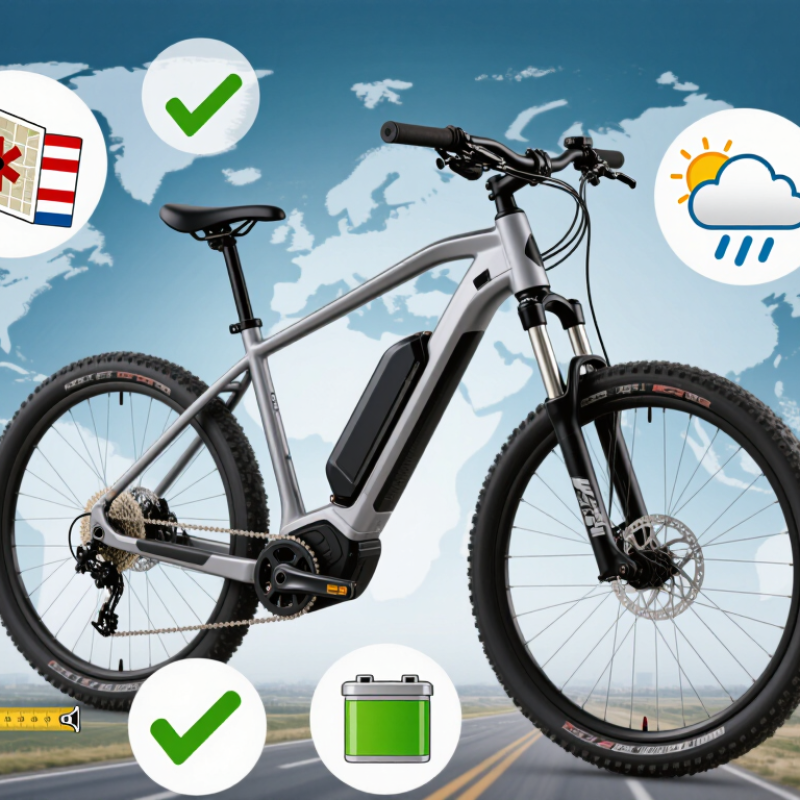
Choosing a power e-bike starts with an honest question: where and why will you ride it? A daily commuter may need reliable lights, full mudguards, and a comfortable upright position. A rider carrying groceries needs a strong rear rack, stable handling, and predictable braking. For steep streets, check motor torque rather than trusting wattage alone. A smooth climb matters more than an impressive number.
Write down your usual route. Note its distance, hills, road surfaces, traffic, and storage conditions. A ten-mile ride on flat pavement feels very different from a shorter route with rough paths and constant climbs. Battery range also changes with rider weight, temperature, tire pressure, assist level, and wind. Leave a practical reserve. I once underestimated winter range, and the final miles felt unnecessarily stressful.
Test the riding position for at least fifteen minutes. Your knees should move freely, your wrists should stay relaxed, and the frame should feel controllable when walking beside the bike. Try starting on an incline if possible. Listen for unusual motor noise and check how quickly the brakes respond. Do not choose a powerful system that feels difficult to manage. That mistake is easy to make. Consider charging access, repair support, replacement parts, and safe indoor storage before buying. A bike can perform well on paper yet fail your daily routine.
Tip 1: Compare usable motor power, not only the advertised wattage. Continuous power affects hill climbing, heat control, and steady speed. Peak power feels exciting but may last briefly. The European standard EN 15194 uses a 250-watt continuous reference for many pedal-assist cycles, where applicable. Local rules still differ.
Tip 2: Match battery capacity to your real route. A 500 Wh battery stores more energy than a 400 Wh unit, but rider weight, hills, wind, temperature, and tire pressure change results. The IEA Global EV Outlook 2024 identifies electric two- and three-wheelers as the most electrified road-transport segment. That growth makes honest range testing more important. A rough estimate is not a promise. I once trusted a display showing 90 kilometers and finished with little reserve after climbing wet hills.
Tip 3: Calculate expected range from Wh per kilometer. For example, a 500 Wh battery using 12 Wh/km may provide about 42 kilometers after allowing a practical 20% reserve. Real-world testing should include your luggage, road surface, and assist setting. Battery capacity also declines with age; the U.S. Department of Energy notes that temperature and charging behavior influence battery performance. Ask for test conditions, cycle-life data, and charger specifications. Small details matter. A larger motor can drain the same battery faster, so power, capacity, and range must be judged together.
| Tip | Comparison Dimension | Typical Specification or Data | What It Means in Practice | Recommended Buying Check |
|---|---|---|---|---|
| 1Motor Output | Rated motor power | 250–350 W for many urban e-bikes; 500–750 W for stronger hill or cargo applications | Higher power can improve hill climbing and acceleration, but it may increase energy use, weight, and regulatory restrictions. | Confirm whether the advertised figure is continuous rated power or a temporary peak-power figure. |
| 2Battery Capacity | Energy storage | 400–500 Wh for everyday commuting; 600–750 Wh for longer rides, hills, or heavy loads | A watt-hour (Wh) rating is more useful than amp-hours alone because it combines voltage and capacity. | Compare Wh using the same calculation: Voltage × Amp-hours = Watt-hours. |
| 3Expected Range | Distance per charge | A 500 Wh battery may provide approximately 40–100 km, depending on conditions and assistance level | Low assist on flat roads can produce much greater range than high assist on hills or loose surfaces. | Use a range estimate based on rider weight, cargo, terrain, temperature, tire pressure, and riding mode. |
| 4Motor Type | Hub motor versus mid-drive motor | Hub motors are commonly simpler and less expensive; mid-drive motors apply power through the bicycle’s drivetrain | Hub motors suit flatter urban routes. Mid-drive systems generally provide better climbing performance and balanced handling. | Choose the motor layout according to terrain, load, maintenance access, and local service capability. |
| 5Torque | Low-speed pulling force | Approximately 40–60 Nm for general commuting; 70–100 Nm for steep hills or cargo use | Torque affects starting from a stop and climbing, while wattage indicates the motor’s power output. | Do not compare wattage alone; check torque, controller settings, rider load, and hill gradient together. |
| 6Charging Time | Battery recharge duration | A typical 400–750 Wh battery takes approximately 4–8 hours with a standard charger | Charging time depends on battery size, charger current, battery temperature, and the final charging stage. | Check the charger input voltage and plug type for the destination country before purchase. |
| 7Battery Life | Charge-cycle durability | Many lithium-ion e-bike batteries are designed for roughly 500–1,000 full-equivalent cycles | Actual service life depends on storage temperature, charging habits, depth of discharge, and operating conditions. | Ask for the battery chemistry, protection features, replacement cost, and availability of compatible batteries. |
| 8Weather Protection | Water and dust resistance | Look for a clearly stated enclosure rating, such as IPX4 or higher for common splash exposure | A water-resistance rating does not mean the e-bike can be submerged or safely pressure-washed. | Check the rating for the battery, motor, display, and connectors separately, not just for one component. |
| 9Legal Compliance | Speed, power, and equipment rules | Requirements vary by country and may include limits such as 25 km/h or 32 km/h assisted speed | Some regions classify higher-powered models as mopeds or motorcycles, requiring registration, insurance, licensing, or protective equipment. | Verify local rules for motor rating, assisted speed, throttle use, helmet requirements, lighting, and road access. |
| 10Total Ownership | Purchase and operating cost | Include the e-bike, charger, shipping, import duties, taxes, service, replacement battery, tires, brakes, and accessories | A lower purchase price may become more expensive if parts, diagnostics, or battery replacement are difficult to obtain. | Request a written parts list, warranty terms, service procedure, and estimated replacement costs before ordering. |
10 Tips for Global Buyers Choosing a Power E Bike
Tip 1: Inspect the frame before admiring the motor. A low step-through frame helps shorter riders and daily commuters mount safely. A sloping top tube can reduce injury risk during sudden stops. Check welds, cable routing, and battery placement. ISO 4210 bicycle safety standards provide useful reference points, although local certification still matters.
Tip 2: Test comfort for at least ten minutes. Your hands should rest lightly on the grips. Your knees should remain slightly bent at the lowest pedal position. The saddle should support your sit bones, not press against soft tissue. The 2023 PeopleForBikes market report recorded about 1.1 million e-bikes sold in the United States during 2022. More buyers now need adjustable, practical designs. Yet, comfort is personal. My own first test was too brief, and the handlebar felt fine until the fifth kilometre.
Tip 3: Do not judge weight from photographs. Lift the bicycle from the frame, then roll it over a curb. A heavy battery, rear rack, or integrated lock can change handling noticeably. Select a frame size using inseam, reach, and riding posture. Manufacturers often publish size charts, but charts cannot replace a real fitting. Leave space for winter clothing. A perfect summer fit may feel cramped later. Check whether the display, brake levers, and controls remain easy to reach while wearing gloves.
Rider-height fit ranges by common bicycle frame size
A properly matched frame improves comfort, control, and pedaling efficiency. The ranges shown are common sizing guidelines in centimeters and may vary with frame design, seat-tube length, reach, handlebar position, and suspension setup. Always compare the manufacturer’s geometry chart and check standover clearance before buying.
Choosing a power e-bike for international travel requires more than checking motor output or battery range. Inspect the frame welds, fork alignment, and handlebar clamp under bright light. Look underneath. Loose cables, sharp edges, or uneven welds deserve questions before payment.
Reliable safety begins with controlled stopping.
Test both brakes on a dry, quiet surface, and check whether levers feel firm. Hydraulic and mechanical systems need different maintenance schedules. Front and rear lights should remain visible in low light, while reflectors support visibility from the side. A secure battery should lock firmly, show no swelling, and use a charger matched to its voltage. Check the charger. Ask for documented testing from an accredited laboratory, including electrical, battery, and water-resistance information. A display can look impressive while hiding weak connectors.
Legal requirements differ by country, and sometimes by city or road type.
Confirm permitted motor power, assisted speed, throttle operation, minimum rider age, helmet rules, lighting standards, and whether registration or insurance applies. Importers may also need conformity documents, serial numbers, battery shipping paperwork, and translated manuals. Never rely on a seller’s phrase, “road legal worldwide.” It is not a legal category. Contact the destination transport authority before ordering, especially when crossing borders. I would also record the local rules in writing, because online summaries can be outdated. No checklist catches every weakness. A short supervised ride may reveal uncomfortable reach, delayed assistance, or poor balance that specifications cannot show.
A reliable supplier should provide more than attractive product photos. Request factory audit records, quality certificates, battery test reports, serial-number tracking, and recent export references. CONEBI’s European Bicycle Industry and Market Profile 2024 reported about 5.1 million e-bikes sold in Europe during 2023. That scale makes after-sales capacity essential, not optional. Ask how many technicians handle warranty cases and how quickly they answer technical questions.
Read the warranty before discussing price. Check coverage for the motor, battery, controller, frame, charger, and display. Confirm exclusions, labor costs, claim evidence, and replacement procedures. A practical supplier should keep common parts available for several years. I once focused too heavily on unit cost. That shortcut looked efficient, but delayed parts created larger losses. A written response-time promise matters.
Shipping deserves equal attention. Request a complete landed-cost estimate, including packaging, insurance, customs documents, and battery transport requirements. The International Air Transport Association classifies lithium batteries as dangerous goods, so incomplete paperwork can cause serious delays. Test one sample shipment before placing a large order. Measure carton damage, charging performance, and delivery time. Support should include clear manuals, video guidance, multilingual communication, and local repair training. MarketsandMarkets projects continued global growth in the e-bike market, but forecasts cannot guarantee supplier performance. Verify every promise with records, samples, and references.
Compare usable continuous power, not only peak wattage. Continuous power affects hill climbing, heat control, and steady speed. Peak power may disappear quickly. Local rules differ.
Match watt-hours to distance, hills, rider weight, wind, and luggage. A 500 Wh battery stores more energy than a 400 Wh battery. However, capacity alone cannot guarantee range.
Use this formula: usable battery watt-hours divided by consumption per kilometer. Keep about 20% battery in reserve. For example, 500 Wh at 12 Wh/km gives roughly 33 kilometers with that reserve, not 42. Check the arithmetic.
Test with your normal luggage, tire pressure, road surface, temperature, and assist setting. Include wet hills if they are part of your route. A dashboard estimate may look generous.
No. A larger motor can improve climbing but drain the same battery faster. Judge motor power, battery capacity, and expected range together. More power is not always more useful.
Request factory audit records, quality certificates, battery test reports, serial-number tracking, and recent export references. Ask how many technicians manage warranty cases. Photos are not evidence.
Confirm coverage for the motor, battery, controller, frame, charger, and display. Check exclusions, labor charges, claim evidence, and replacement procedures. Ask how long common parts remain available.
Request a complete landed-cost estimate, including packaging, insurance, customs documents, and battery transport requirements. Test one sample shipment before a large order. Measure carton damage, charging performance, and delivery time. I once trusted promises too easily. That was expensive.
Choosing the right Power E Bike starts with understanding your main riding needs, such as commuting, leisure, long-distance travel, or carrying extra loads. Consider the terrain, riding frequency, distance, and weather conditions you expect to encounter. Compare motor power, battery capacity, charging time, and realistic riding range rather than relying only on advertised figures. A suitable frame design, comfortable riding position, manageable weight, and correct frame size can greatly improve control and daily enjoyment.
Global buyers should also review essential safety features, component quality, lighting, braking performance, and the requirements that apply in their destination market. Before placing an order, evaluate the supplier’s reliability, product documentation, warranty coverage, shipping process, spare-parts availability, and after-sales support. Clear communication and transparent policies can reduce purchasing risks and make maintenance easier. By balancing performance, comfort, safety, compliance, and service, buyers can select a Power E Bike that matches their practical needs and provides dependable long-term value.

Asian Dragon