Global buyers are watching the Electric Bike market closely.
The opportunity is substantial.
Deloitte’s 2020 Technology, Media, and Telecommunications Predictions estimated that 130 million e-bikes could be sold worldwide between 2020 and 2023. Market research firms report continued growth, although their forecasts differ because definitions and regional data vary. That inconsistency deserves attention. A large market does not automatically identify a dependable manufacturer.
For importers, retailers, and fleet operators, manufacturer selection requires more than comparing motor wattage. Battery certification, supplier traceability, warranty performance, spare-part access, and after-sales training can determine real ownership costs. A bright showroom model means little when a replacement controller takes twelve weeks to arrive. EN 15194, UL 2849, and equivalent regional requirements may also influence purchasing decisions, depending on the destination market.
Ed Benjamin, a longtime electric-mobility analyst and former Light Electric Vehicle Association chairman, described the electric bicycle as “the most efficient motor vehicle ever invented.” His observation highlights the category’s practical appeal, but efficiency alone cannot prove product quality. Factory audits, sample testing, transparent documentation, and conversations with existing distributors provide stronger evidence.
This guide examines leading Electric Bike manufacturers serving international buyers. It considers production scale, technology, customization, compliance support, and distribution capability. Some rankings remain subjective. Data availability is uneven. Therefore, responsible buyers should verify every claim independently before signing a supply agreement. The best manufacturer may not be the largest. It may be the one that answers quickly, supplies consistently, and supports the bicycle after delivery.
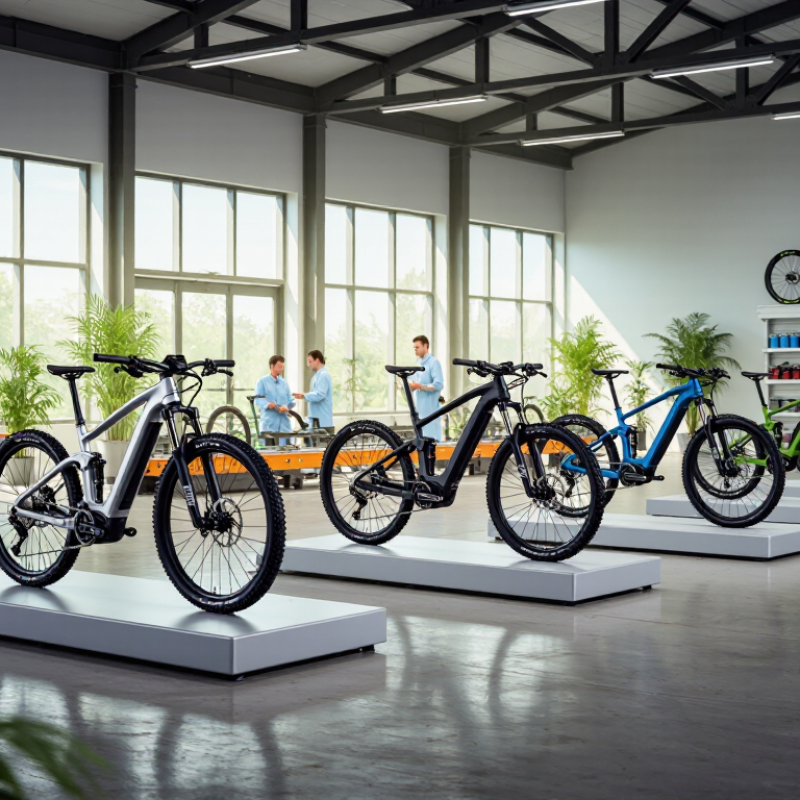
Top Electric Bike Manufacturers for Global Buyers?
Global e-bike demand is no longer a niche trend. European sales reached about 5.5 million units in 2022, according to widely cited industry estimates. That figure shows strong consumer acceptance, especially for commuting and short urban trips. It also signals manufacturing pressure. Buyers now expect safer batteries, dependable motors, and consistent spare-parts supply. However, the number is not a complete market picture. Definitions and reporting methods can differ between countries.
Global buyers should assess manufacturers through evidence, not attractive catalogs. Request battery safety test reports, quality-control procedures, production capacity, and warranty terms. Check whether electrical systems match the destination market’s requirements. Ask about charger compatibility, replacement cells, software support, and repair training. A low purchase price may become expensive when one missing component stops an entire shipment. Factory audits and sample testing add useful confidence. Still, even careful checks can miss problems.
Tips: Compare three suppliers. Test sample bikes on hills and rough roads. Inspect welds, cables, brakes, and battery mounts. Confirm serial-number tracking. Clarify delivery times in writing. Keep some budget for defects and returns. Do not rely only on sales claims. Reflect on after-sales support before signing, because that part is often underestimated.
Europe sold approximately 5.5 million electric bicycles in 2022. Germany was the largest individual market, followed by France, the Netherlands, Italy, and Belgium. The comparison below uses reported 2022 unit sales and does not include company or brand-level data.
Source references: CONEBI European Bicycle Industry and Market Profile, 2023; German Bicycle Industry Association (ZIV), 2023; Union Sport & Cycle, France; RAI Association and BOVAG, Netherlands; ANCMA, Italy. Figures are rounded and shown in thousands of units.
For global buyers, motor power is only a starting point. Rated continuous power gives a fairer comparison than peak wattage. In Europe, pedal-assisted cycles commonly use motors up to 250 watts, with assistance limited near 25 km/h. Other markets permit higher outputs, so local rules matter. A 750-watt label may look impressive, but hill performance also depends on torque, controller tuning, rider weight, and wheel size.
Battery capacity deserves closer attention. Wh equals nominal voltage multiplied by amp-hours. A 500 Wh battery may support roughly 40–80 kilometers, depending on terrain, temperature, cargo, tire pressure, and assist level. The International Energy Agency reported that electric two- and three-wheelers represented a major share of global electric vehicle sales in 2023, showing why standardized testing remains important. Yet advertised range is rarely a promise. Real roads are messier.
Weight changes daily usability. A 24-kilogram bicycle feels manageable on a ramp, but exhausting on three flights of stairs. Compare the complete riding weight, including the battery and rack. Battery removal can reduce lifting strain, though it may weaken frame balance. Industry testing guidance from the European Committee for Standardization emphasizes controlled conditions, while consumer reports often reveal wider real-world variation. A neat spreadsheet can still mislead. Ask for test conditions, charger details, warranty coverage, and replacement-battery availability. Then test the brakes on a wet descent.
Asian electric-bike manufacturers dominate the global supply chain through scale, supplier density, and export experience. The International Energy Agency reported that electric two- and three-wheelers remained the world’s largest electric-vehicle segment by sales in 2023. China continues to drive this volume, supported by established motor, battery, controller, and frame networks.
Scale matters at the loading dock. Large factories can purchase cells in bulk, test thousands of battery packs, and standardize spare parts across markets. The China Bicycle Association has reported annual domestic electric-bicycle production above 40 million units in recent years. Export-oriented producers across China and Southeast Asia also serve Europe, North America, Latin America, and the Middle East. Export buyers should inspect more than factory capacity. Ask for UN 38.3 battery testing, IEC 62133 documentation, charger approvals, and traceable serial numbers. Small details matter.
Not every large supplier is equally dependable. Production numbers can hide weak warranty systems, inconsistent firmware, or poor packaging. I have seen impressive samples arrive with loose connectors and unclear manuals. That should make buyers cautious. Reports from the International Transport Forum and market research firms also show that safety rules and certification requirements differ sharply by region. A serious manufacturer should provide regional compliance files, realistic lead times, battery replacement plans, and responsive technical support. Price still matters, but export scale without after-sales discipline is an incomplete advantage.
Choosing an electric bike for global use requires more than comparing motor wattage. European manufacturers often prioritize compact frames, smooth pedal assistance, integrated lights, and compliance with regional speed limits. Their bikes suit dense streets, cycle lanes, and shorter daily commutes. North American manufacturers commonly offer wider tires, stronger cargo options, and larger frame sizes. These features help on rough paths, long suburban routes, and mixed terrain.
I have found that regional fit matters most during real test rides. A step-through frame feels safer when traffic stops suddenly. Hydraulic disc brakes provide confidence on wet hills. Mid-drive motors climb better, but hub motors can feel simpler and less expensive to service. Battery capacity also needs context. A 500Wh battery may cover a full workday, yet cold weather, hills, rider weight, and tire pressure can reduce that distance sharply.
Warranty access deserves equal attention. Check whether local dealers stock brake pads, sensors, chargers, and replacement displays. Some imported models look impressive online but become inconvenient when one small component fails. I once underestimated frame geometry and regretted it after an hour of riding. That mistake still shapes my recommendations. Test the bike with your usual luggage, inspect the charging connector, and confirm service coverage before paying. Regional reputation helps, but local support often matters more.
For global buyers, electric bike verification should begin with documented standards, not attractive product photos. EN 15194 helps assess pedal-assist systems, electrical safety, and key performance requirements in relevant European markets. UL 2849 focuses on the safety of the complete electrical system, including the battery, charger, wiring, and controls. Ask for current certificates, test reports, and the exact model numbers covered. A certificate for one configuration may not cover another.
Check the battery label, charger specifications, and frame identification in person or through clear inspection images. Experienced buyers should compare documents with the shipped product. Look for matching voltage, capacity, connector design, and controller details. Small differences matter. Ask who performed the testing and when it was completed. Online documents can be outdated.
Warranty terms reveal the manufacturer’s practical reliability. Confirm coverage periods for the motor, battery, controller, display, and frame. Ask whether labor, return freight, diagnostics, and replacement parts are included. Service response time deserves written confirmation. Can technicians provide fault codes and repair instructions? Can replacement batteries be supplied safely and legally in the destination market? I would not rely on a vague “full warranty.” That wording often hides exclusions. A detailed claim process is better, although even good paperwork cannot guarantee smooth support. Keep inspection photos, serial numbers, invoices, and delivery records. They make disputes less uncertain.
| Verification Area | Recognized Benchmark or Requirement | What Buyers Should Verify | Acceptable Evidence | Warning Signs |
|---|---|---|---|---|
| EN 15194 applicability | EN 15194 is the European standard for electrically power-assisted cycles, commonly referred to as EPACs. | Confirm that the certificate or test report applies to the exact bicycle model, configuration, battery, charger, and motor system being purchased. | Model-specific conformity documentation issued by a competent testing or conformity-assessment body. | A generic certificate with no model reference, incomplete technical file, or a claim that testing automatically provides road approval in every country. |
| EPAC performance limits | For the common European EPAC category, motor assistance is limited to a maximum continuous rated power of 250 W and must cut off before the bicycle exceeds 25 km/h, or when the rider stops pedaling. | Check the declared continuous rated power, assistance cut-off speed, pedal-assistance logic, and whether any throttle function changes the legal classification. | Technical specifications, controller settings, conformity documentation, and an inspection or test record for the supplied configuration. | Marketing based only on peak watts, an adjustable speed limiter without controls, or specifications that conflict with the conformity documents. |
| EN 15194 safety scope | The standard addresses relevant mechanical, electrical, functional, and electromagnetic-compatibility safety aspects of EPACs and their electrical systems. | Verify that the safety assessment covers the complete delivered system, including wiring, controls, battery interface, charger, and protection functions. | Test report or technical file listing the tested components and configuration, plus user instructions and safety warnings. | Unidentified battery cells, loose wiring, missing charging instructions, or replacement parts that are not covered by the original assessment. |
| UL 2849 scope | UL 2849 evaluates electrical-system safety for personal e-mobility devices such as e-bikes, including interactions among the battery, charger, motor, controller, wiring, and protection circuits. | Determine whether the listing or certification covers the complete e-bike electrical system and the exact model, battery, charger, and power configuration. | A verifiable certification record or test documentation from an appropriately recognized certification organization. | A component-level battery mark presented as complete-bike certification, altered charging equipment, or a certificate that cannot be matched to the product. |
| Relationship between EN 15194 and UL 2849 | These standards address different conformity and market contexts; one does not automatically replace the other or guarantee compliance with local traffic, radio, battery-transport, or consumer laws. | Select documentation according to the destination market and separately verify local requirements for speed, power, labeling, lighting, reflectors, chargers, and imports. | A destination-market compliance checklist supported by model-specific technical documents and current local regulatory guidance. | A statement that one standard provides worldwide approval or that certification eliminates the need to check destination-country rules. |
| Battery and charger documentation | Lithium-ion battery packs and chargers require compatible electrical ratings, protection controls, safe charging instructions, and appropriate transport documentation where applicable. | Match voltage, current, connector, polarity, battery capacity, charger output, cell information, and replacement-part specifications. | Battery and charger labels, safety data, user manual, test reports, and applicable transport documentation such as UN 38.3 records for lithium batteries. | Unlabeled packs, incompatible chargers, instructions to bypass the battery-management system, swelling, overheating, or unexplained charging failures. |
| Warranty terms | Warranty duration and coverage vary by seller, product category, destination, and applicable consumer law; there is no single universal warranty period for all e-bikes. | Check coverage periods for the frame, motor, controller, display, battery, charger, and labor, together with exclusions, claim deadlines, and shipping responsibilities. | A written warranty policy that identifies the seller or responsible entity, covered parts, remedies, claim process, and governing territory. | Only verbal promises, unclear battery-capacity exclusions, “wear item” language covering major electrical parts, or no procedure for international claims. |
| After-sales service | Effective support should provide diagnostics, spare parts, repair instructions, software or controller support where needed, and a defined escalation process. | Confirm service locations, response times, technician capability, parts availability, return procedures, and whether repairs can be completed in the destination country. | Service-level terms, parts catalog, repair network details, diagnostic process, and written pre-sale answers to technical questions. | No local repair route, unavailable replacement batteries, proprietary parts with no supply commitment, or support limited to automated messages. |
| Buyer verification decision | A reliable purchase decision requires consistency between the product specification, certification evidence, warranty, service plan, and destination-market rules. | Request documents before payment, record the exact model and component configuration, and independently verify certificates where possible. | A completed document pack with model identifiers, dated quotations, warranty terms, service contacts, and delivery inspection criteria. | Conflicting specifications, pressure to pay before document review, missing serial-number records, or refusal to provide written terms. |
Note: Certification standards and legal requirements can change by jurisdiction. Buyers should confirm current requirements with the relevant market authority before importing or selling an electric bicycle.
European sales reached about 5.5 million units in 2022. Definitions vary between countries, so this figure is not complete. Still, demand is clearly substantial.
Request battery test reports, quality-control records, warranty terms, and production details. Ask about spare parts and repair training. A bright catalog proves very little.
Large factories can purchase battery cells in bulk and standardize replacement parts. They may also test thousands of battery packs. Scale helps, but it does not guarantee dependable service.
Ask for UN 38.3 testing, IEC 62133 documentation, and traceable serial numbers. Confirm charger compatibility for the destination market. Paperwork can still contain gaps.
Ride samples on hills and rough roads. Inspect welds, cables, brakes, and battery mounts. Check for loose connectors after testing. Small faults become expensive later.
Clarify warranty coverage, replacement batteries, software support, and technical response times. Put delivery dates in writing. Support is often underestimated.
No. One missing component can delay an entire shipment. Keep money for defects, returns, and replacement parts. Cheap can become costly.
Compare at least three suppliers before signing. Review samples, compliance files, lead times, and warranty systems. I would not rely only on sales claims.
The global Electric Bike market continues to expand, with Europe recording approximately 5.5 million sales in 2022. For international buyers, selecting the right manufacturer requires more than comparing prices. Key evaluation factors include motor power, battery capacity in watt-hours, practical riding range, overall weight, build quality, and suitability for local roads and climate conditions. Manufacturers from Asia often offer broad production capacity, competitive pricing, and strong export experience, while European and North American suppliers may focus more on regional riding preferences, design, and local distribution.
Before placing an order, buyers should verify compliance with recognized safety standards such as EN 15194 or UL 2849, depending on the target market. Clear warranty terms, replacement-part availability, technical support, and an established service network are equally important. A reliable purchasing decision should balance performance, safety, long-term maintenance, and after-sales support rather than relying on brand popularity alone.
Asian Dragon